
A reefer container is a refrigerated shipping container used to transport or store temperature-sensitive cargo. An integrated refrigeration unit maintains a controlled internal temperature and circulates conditioned air throughout the container.
The term “reefer” is short for refrigerated container. You may also encounter abbreviations such as RF container, although the exact technical and ISO designation can vary by container type.
What is a reefer container used for?
Reefer containers are used when products must remain within a controlled temperature range during transport or storage. They play an important role in international cold-chain logistics, but can also provide temporary or permanent refrigerated capacity at a fixed location.
Common types of reefer cargo include:
- fruit and vegetables;
- meat and seafood;
- dairy products;
- chilled and frozen food;
- flowers and plants;
- pharmaceutical products;
- other temperature-sensitive goods.
Reefers can also be used as additional cold storage at production facilities, warehouses, events and catering locations.
-
 View container
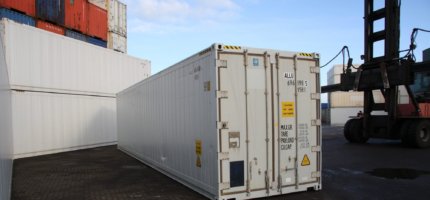
40FT High cube Reefer Container
When to choose a 40FT High Cube reefer container A High Cube reefer is generally selected when additional internal height and capacity are required without… -
 View container
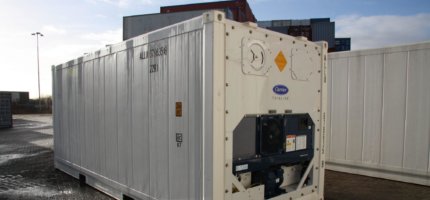
20FT Reefer Container New
Reefer containers can be used for the storage or transportation of goods that need to be cooled, which are usually perishable goods. These goods have…
How does a reefer container work?
A reefer container has an insulated cargo area and an integrated refrigeration unit. The unit conditions the air and circulates it through the container to maintain the selected temperature.
The reefer must be connected to a suitable electrical power supply. At a depot, terminal, vessel or fixed storage location, this can be a permanent power connection. During road transport or at locations without fixed electricity, a genset can supply the required power.
Air circulation and the T-floor
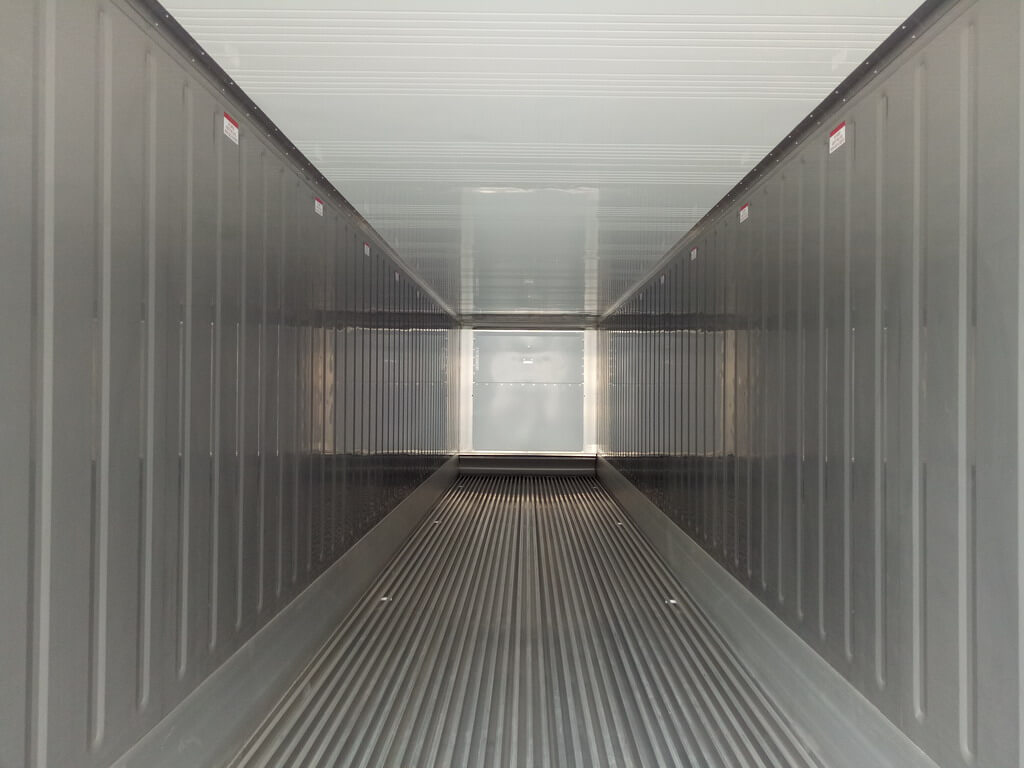
Most reefer containers have an aluminium T-floor. Conditioned air is distributed underneath the cargo through the channels in this floor. The air then moves around the load and returns to the refrigeration unit.
Correct loading is essential. Cargo must not block the airflow channels, air outlets or required clearance around the load. Restricted airflow can create uneven temperatures inside the container.
Temperature control
The required setpoint depends on the cargo and application. Reefers can support chilled, frozen and certain controlled-temperature applications, but the available temperature range varies by refrigeration unit.
Reefer containers are primarily designed to maintain the required cargo temperature. Some units and operating conditions allow cargo temperature to be reduced, but this depends on the product, packaging, airflow and refrigeration capacity. Pre-cooling may therefore be required before loading.
Water-cooled reefer systems
Some refrigeration units can use a water-cooled condenser when heat cannot be discharged effectively through the surrounding air, for example in certain below-deck vessel configurations. The water does not cool the cargo directly; it helps the refrigeration system remove heat.
Whether a water-cooled configuration is necessary depends on the vessel, installation and refrigeration unit.
What are the main parts of a reefer container?
The exact configuration varies, but a reefer container generally includes:
- an insulated container structure;
- an integrated refrigeration unit;
- a control panel for temperature settings and monitoring;
- a T-floor for air distribution;
- supply and return air openings;
- an electrical connection;
- doors with insulated seals.
Some reefers also provide ventilation, humidity control or data recording functions. Available features depend on the installed unit and model.
Does a reefer container need a genset?
A genset is a generator set that supplies electricity to the refrigeration unit when no fixed power connection is available. It does not cool the container itself.
Two common configurations are:
- clip-on gensets, which are mounted on the front of the container;
- underslung gensets, which are mounted underneath a trailer chassis.
A genset may be required during road transport or at temporary locations without a suitable electrical connection. View the available gensets for reefer containers for more information.
-
 View container
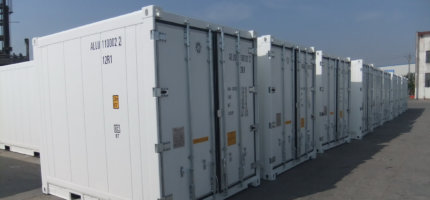
10FT Reefer Container New
Compact refrigerated storage in a 10FT format A 10FT reefer container combines refrigerated capacity with a compact footprint. This makes it suitable for locations with… -
View container
20FT Reefer Container New
Reefer containers can be used for the storage or transportation of goods that need to be cooled, which are usually perishable goods. These goods have…
Reefer refrigeration-unit manufacturers
Common manufacturers of reefer refrigeration units include Carrier, Thermo King, Daikin and Star Cool. These manufacturers produce the cooling systems installed in the container rather than necessarily manufacturing the complete container structure.
Each unit has its own specifications, operating range, power requirements and control system. The manufacturer alone therefore does not determine whether a container is suitable for a particular application.
Reefer container sizes and types
Reefer containers are available in several formats. Common options include:
- 10FT reefer containers for compact refrigerated storage;
- 20FT reefer containers for storage and transport;
- 40FT reefer containers for larger refrigerated volumes;
- 40FT High Cube reefers with additional internal height.
New and used containers are available in different technical conditions and configurations. Internal dimensions and usable capacity can vary according to the container and installed refrigeration unit.
What do PTI and CSC mean?
A Pre-Trip Inspection, commonly abbreviated to PTI, checks the operation of the refrigeration unit before use. It can include checks of the controls, alarms, temperature sensors and cooling performance.
CSC certification concerns the structural safety of a container intended for international transport. PTI and CSC therefore serve different purposes: one relates primarily to the refrigeration system, while the other concerns the structural suitability of the container for transport.
Can a reefer container be modified?
A reefer container can sometimes be modified with features such as additional doors, lighting, locks, ventilation or internal partitioning. The feasibility depends on the container, refrigeration system and intended application.
Alconet can coordinate suitable modifications with specialist subcontractors. Modifications must be assessed carefully because changes to the structure or airflow can affect performance and transport suitability.
Where can you buy a reefer container?
Alconet supplies new and used refrigerated containers in different sizes and configurations from its depot in Rotterdam. View our complete reefer container range or learn more about reefer containers for sale.
When requesting a quotation, include the intended application, required temperature range, preferred size and delivery destination. This information helps us identify a suitable available container.