
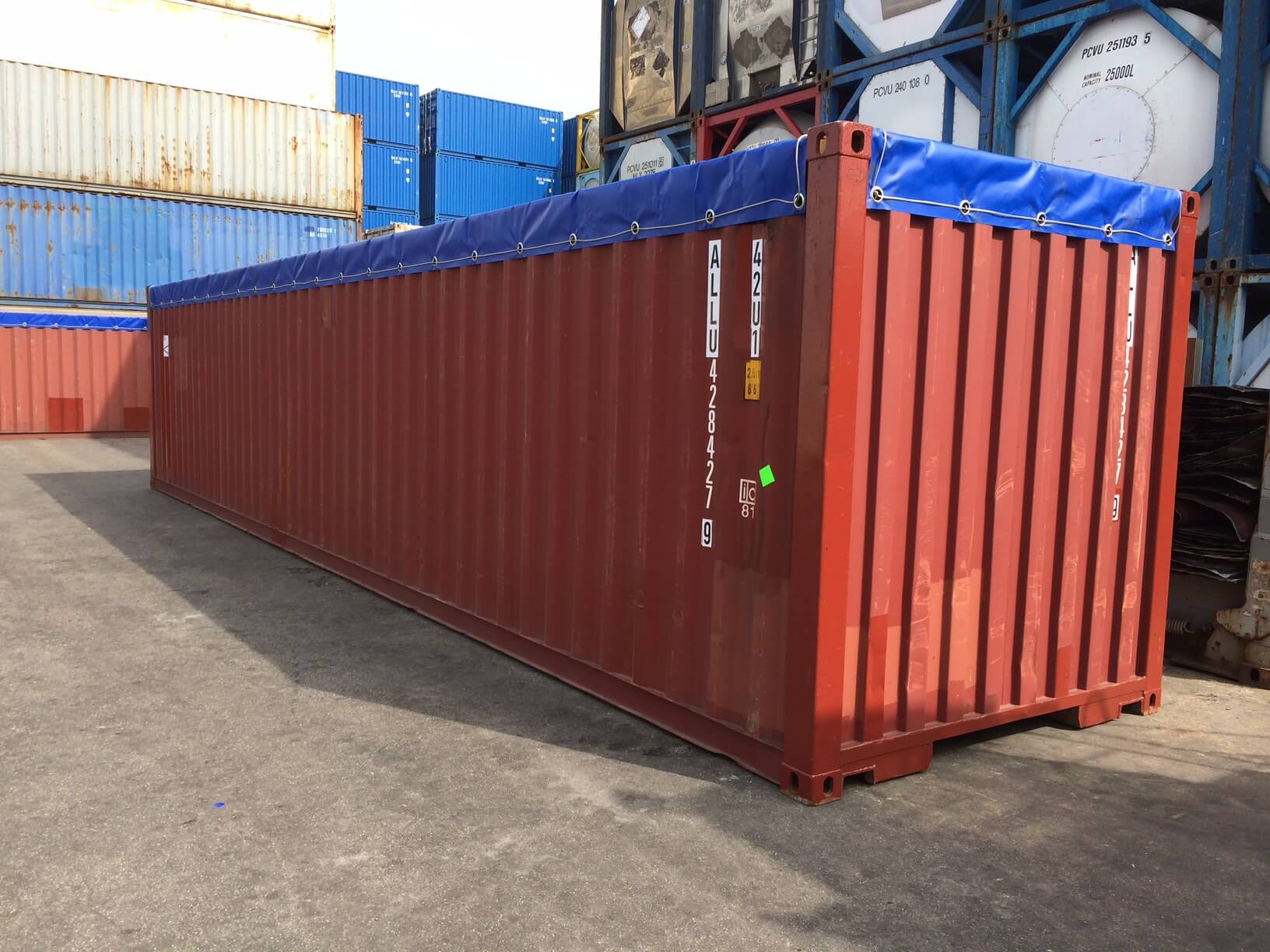
An open top container is a shipping container with a removable top cover instead of a fixed steel roof. Usually fitted with a tarpaulin and removable roof bows, it allows cargo to be loaded from above while retaining solid side walls and end doors.
It is a practical option for machinery, industrial equipment and other cargo that is difficult to load through standard container doors. The abbreviation OT means open top.
How does an open top container work?
Removing the tarpaulin and roof bows provides access through the top. Cargo can be lowered in using suitable lifting equipment, such as a crane. End doors also allow loading from the door side when the cargo and handling method permit.
Top loading, step by step
Open the top. Load the cargo. Secure for transport.
Remove the cover
Remove the tarpaulin and roof bows as required for access.
Load from above
Lower the cargo through the checked roof opening using suitable equipment.
Secure & cover
Secure the load and fit the cover where the cargo configuration allows.
Illustrative process. The lifting plan, load securing and transport arrangements must suit the actual cargo and equipment.
What is an open top container used for?
Open top containers are used when cargo needs top access, is awkward to handle through the doors or requires an agreed over-height transport arrangement. Typical enquiries include:
- heavy machinery and industrial equipment;
- generators, engines and large components;
- steel beams and construction materials;
- pipes, tanks and project cargo;
- suitable bulk materials loaded from above.
Heavy cargo still needs to meet the individual container’s payload, floor-loading and load-distribution limits. Choosing an open top does not remove these checks.
20ft and 40ft open top containers
20ft and 40ft are common open top formats. Choose the size by checking the cargo footprint, loading method and weight, rather than length alone.
20ft open top
A starting point for compact machinery, components and shorter loads that need access from above.
Check payload and floor-loading limits carefully for concentrated heavy loads.
40ft open top
Offers more loading length for longer equipment, larger cargo volumes and project loads.
A longer container does not automatically have a higher payload. Check the offered unit.
In-gauge and out-of-gauge cargo
In-gauge cargo stays within the container’s normal external dimensions. Cargo projecting above the container is out of gauge (OOG) and needs the carrier’s acceptance and suitable handling and stowage arrangements.
Share the full loaded dimensions, including packaging, supports and any projections. Confirm the covering and securing method before booking; an over-height load may prevent a standard tarpaulin from being fitted in the usual way.
Open top container versus standard container and flat rack
| Container type | Roof & sides | When to consider it |
|---|---|---|
| Standard dry | Fixed steel roof and enclosed sides; end-door loading. | Goods that fit through the doors and within the container. |
| Open top | Removable top cover with solid side walls. | Cargo requiring top loading or agreed over-height transport. |
| Flat rack | Open roof and sides, with end structures. | Oversized cargo needing side access or clearance beyond standard width, subject to approval. |
Explore standard shipping containers or flat rack containers, or compare the main types of shipping containers.
Buy or rent an open top container
Alconet supplies new and used open top containers in different sizes and specifications. View our open top containers for sale and rent or ask our team to check suitable options for your cargo, location and required period.
Request open top container advice & a quote
Choose open top as the container type. In the cargo requirements field, include the cargo length, width, height and weight, loading method, delivery location and required date. Mention any over-height projections. If you are unsure about the size, describe the load and ask for advice.
We use your details to respond to your enquiry. Read our privacy statement.
Prefer direct contact? Email Gennaro Carletto or call +31 (0)181 234251.
Frequently asked questions about open top containers
What does OT container mean?
OT is a commonly used abbreviation for open top. It can appear in container specifications, shipping documents and quotations.
Can cargo extend above an open top container?
It may be possible as an out-of-gauge shipment, subject to carrier acceptance and the specific route and handling arrangements. Provide the complete loaded dimensions before booking.
Is an open top container the same as a flat rack?
No. An open top retains solid side walls and provides access from above. A flat rack has open sides as well as an open top, making it an option for different oversized cargo requirements.
Does a tarpaulin provide the same protection as a steel roof?
A tarpaulin is a removable cover, rather than a fixed steel roof. Check the cover’s condition and suitability for your cargo, especially where an over-height load changes how it can be fitted.
What are the exact dimensions of a 20ft or 40ft open top?
Dimensions, openings and weight ratings vary between units. Request the specification of the container being offered and compare the roof opening with your cargo’s loading footprint.
What information do I need for a quotation?
Include the preferred size, quantity, purchase or rental requirement, cargo dimensions and weight, loading method, location and required date. For rental, include the period you need the container.