
The right shipping container depends on your cargo, loading method and temperature requirements. Compare dry van, high cube, reefer, open top, flat rack and tank options below, then explore the range that fits your project.
Which container suits your cargo?
START WITH WHAT YOU NEED TO MOVE OR STORE
Match your cargo to a container
Need extra height? →Compare a high cube format.
Need temperature control? →Explore reefer containers.
Need loading from above? →Consider an open top container.
Oversized or heavy cargo? →Compare flat rack configurations.
Bulk liquid cargo? →Check a suitable tank specification.
This is a starting point. Dimensions, weight, loading method and transport requirements determine the suitable unit.
Shipping container types compared
The overview focuses on how containers are used. High cube describes extra height and can also apply to a reefer. Length, container construction and equipment specification should be checked separately.
| Type | Common formats | Typical use | Key check |
|---|---|---|---|
| Dry van | 20ft / 40ft; 10ft for compact use | General dry goods | Door opening and cargo weight |
| High cube | 40ft illustrated | Tall or bulky dry cargo | Extra height; check payload |
| Reefer | 20ft / 40ft high cube | Temperature-sensitive goods | Power, temperature and airflow |
| Open top | 20ft / 40ft | Cargo loaded from above | Roof opening and cargo height |
| Flat rack | 20ft / 40ft | Oversized or heavy project cargo | Load limits and cargo securing |
| Tank | Commonly 20ft frame | Compatible bulk liquids | Tank specification and cleaning |
Looking for exact measurements? Use our shipping container dimensions guide or compare 40ft standard and high cube dimensions.
Container types: photos, uses and practical checks
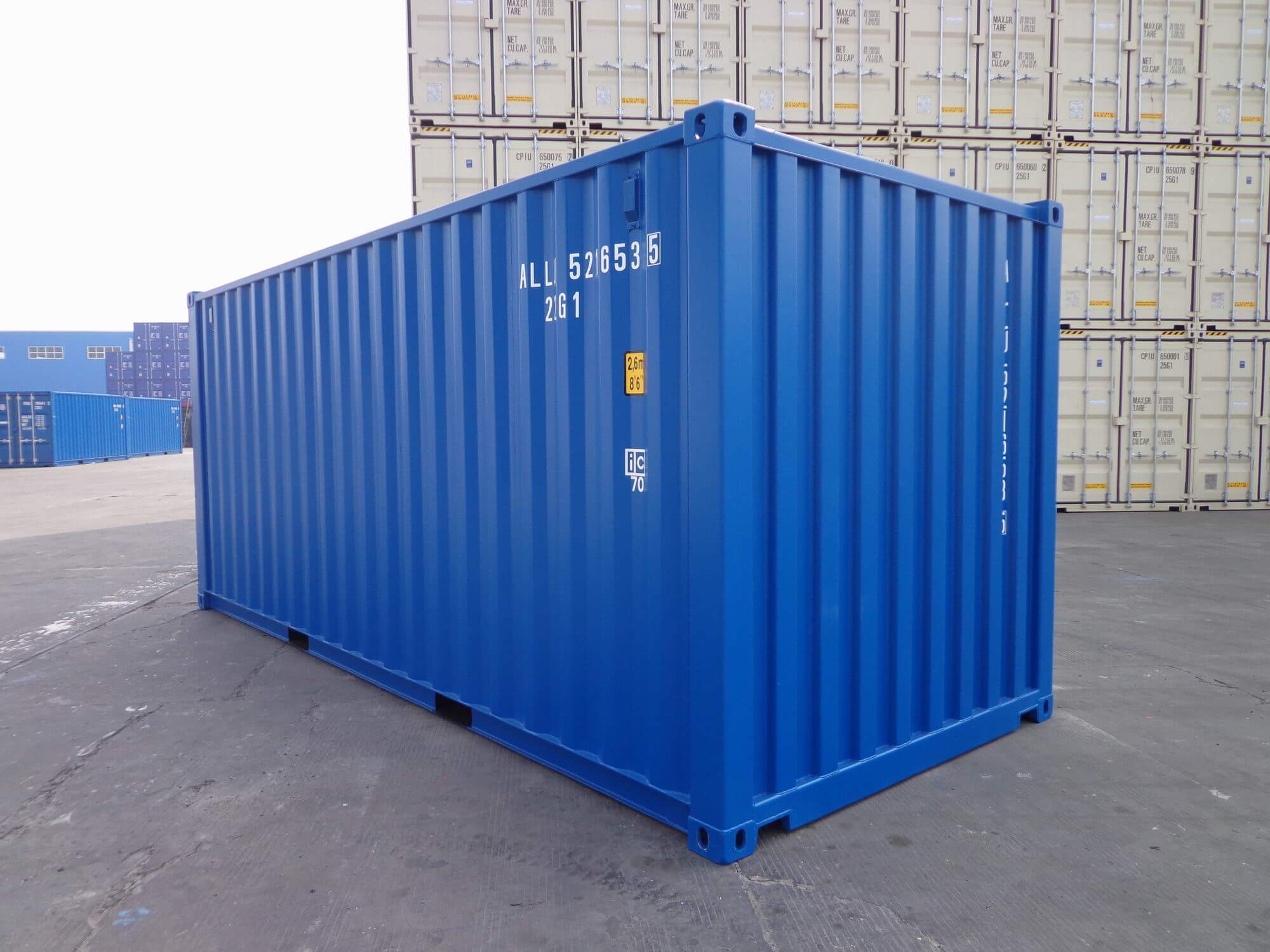
GENERAL DRY CARGO
Dry van container
An enclosed container for general cargo and storage without active temperature control. Typical uses include boxed products, equipment, materials and palletised goods.
Sizes: 20ft and 40ft are common transport formats; 10ft units can suit compact storage.
Before choosing: Check the internal dimensions, door opening and permitted cargo weight.

EXTRA INTERNAL HEIGHT
High cube container
A taller container format, often chosen for bulky or tall dry cargo. A 40ft high cube keeps the standard 40ft length and width while providing extra height.
Sizes: The 40ft high cube shown here is about 2.90 m high externally.
Before choosing: Check door clearance and payload as well as volume. Extra height does not automatically mean a greater weight allowance.
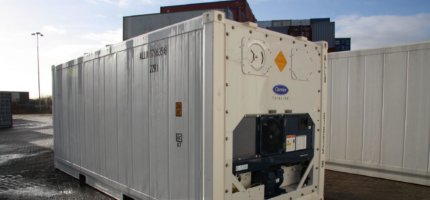
TEMPERATURE-CONTROLLED CARGO
Reefer container
An insulated container with a refrigeration unit for goods that need temperature control, such as food, flowers and pharmaceutical products. Correct loading supports airflow around the cargo.
Sizes: Common formats include 20ft and 40ft high cube reefers.
Before choosing: Confirm the temperature range, electrical supply, internal space and condition of the refrigeration unit.

ACCESS FROM ABOVE
Open top container
A container with side walls and a removable roof cover, usually a tarpaulin supported by roof bows. It allows machinery and awkwardly shaped cargo to be loaded from above.
Sizes: Common lengths are 20ft and 40ft.
Before choosing: Confirm the roof opening, cargo height and lifting arrangements. Overheight cargo may require special transport arrangements.

OVERSIZED & HEAVY CARGO
Flat rack container
A loading platform with open sides and no roof, with fixed or collapsible end walls. Flat racks provide top and side access for machinery, vehicles, structures and other project cargo.
Sizes: Common lengths are 20ft and 40ft.
Before choosing: Check the individual unit’s load limits, weight distribution, securing requirements and transport clearance.

BULK LIQUID CARGO
Tank container
A tank mounted within a transport frame, used for compatible bulk liquids such as food-grade products or chemicals. The correct tank depends on the specific substance and intended operation.
Sizes: A 20ft frame is common for ISO tank containers.
Before choosing: Confirm product compatibility, cleaning history, inspection status and the required tank specification. Food-grade and chemical applications need the appropriate unit.
Power supply for reefer containers
A reefer needs a suitable electrical supply to operate its refrigeration unit. Where an external connection is unavailable, a suitable genset can provide electricity.
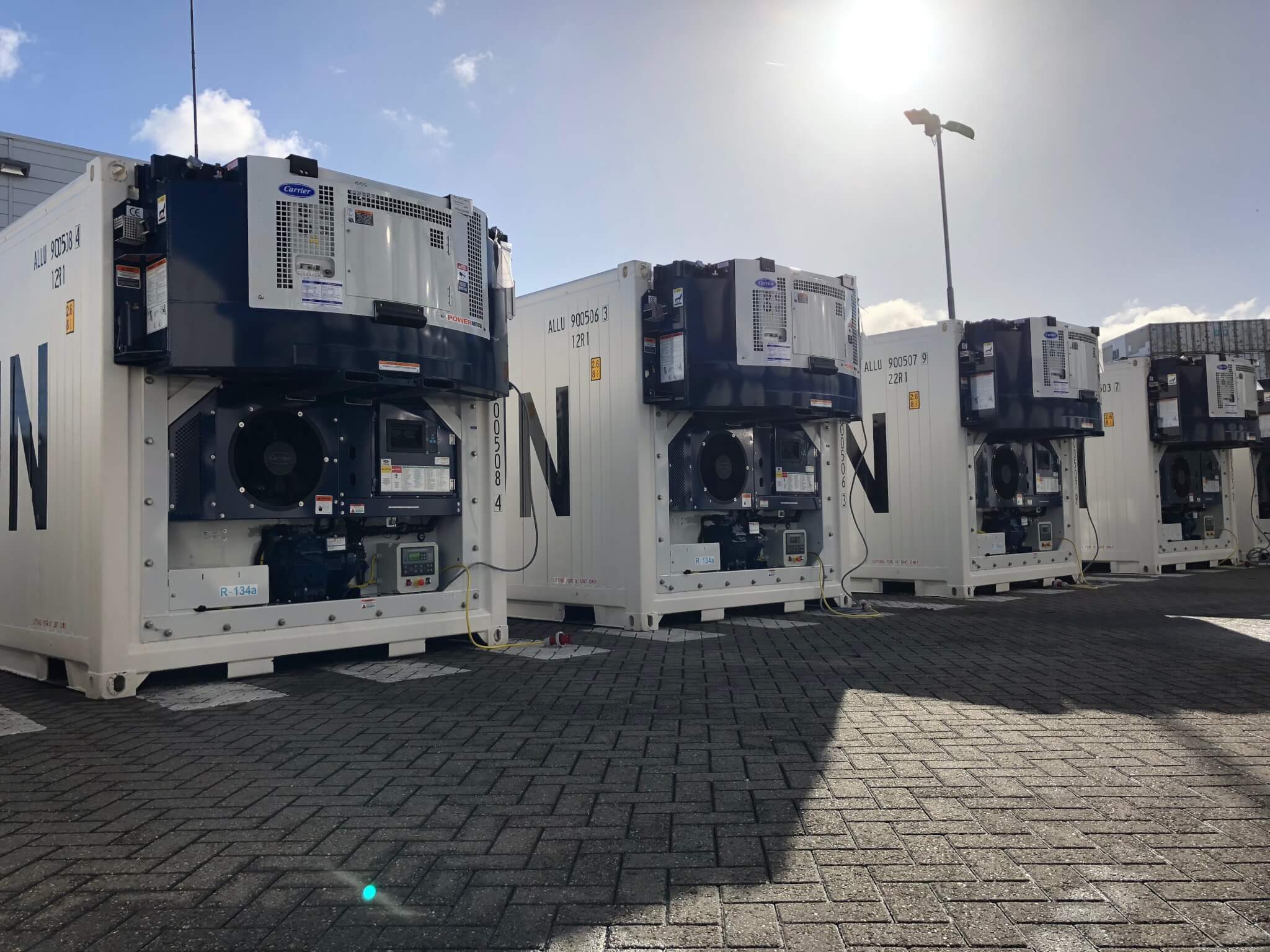
Read how a genset works or explore gensets.
Buying or renting the right container
Tell Alconet what you need to store or transport, where the container is required and how long you expect to use it. Our team can check available options and discuss purchase, rental, delivery and any container modifications.
For an enquiry, include:
- cargo dimensions, packaging and total weight;
- any required temperature control or special loading access;
- preferred size, quantity and condition;
- delivery destination and required date.
FAQ about shipping container types
What is the difference between a dry van and a reefer?
A dry van provides enclosed space without active temperature control. A reefer has insulation and a refrigeration unit for cargo that needs a controlled temperature, together with suitable power and loading arrangements.
Is high cube a separate container type?
High cube identifies a taller format. A dry container or a reefer can be high cube. For a 40ft dry container, the rounded external heights are 2.90 m for high cube and 2.59 m for standard height.
Should I choose an open top or a flat rack?
An open top retains side walls and allows access from above. A flat rack has open sides and no roof, with fixed or collapsible end walls. The right choice depends on cargo dimensions, weight, handling and transport requirements.
Does every tank container carry the same products?
No. The tank must suit the specific substance and operation. Check the required specification, product compatibility, cleaning history and inspection status with the supplier.
Can I rent a container instead of buying one?
Ask about rental options for your required type, location and period. Availability depends on the container specification and project requirements.
What if I do not know which container I need?
Describe your cargo, its dimensions and weight, loading method and delivery destination in the form below. Add the required temperature range if applicable. Our team can help compare suitable options.
Get advice and a container quote
Tell us what you need to store or transport. Choose a type and size if you already know them, or leave those choices open and describe your requirements.
For high cube: select shipping containers and the 40ft high cube size. For a reefer, also mention the required temperature range.
We use your details to respond to your enquiry. Read our privacy statement.
Prefer direct contact? Email Brian Rijkers or call +31 (0)181 254405.